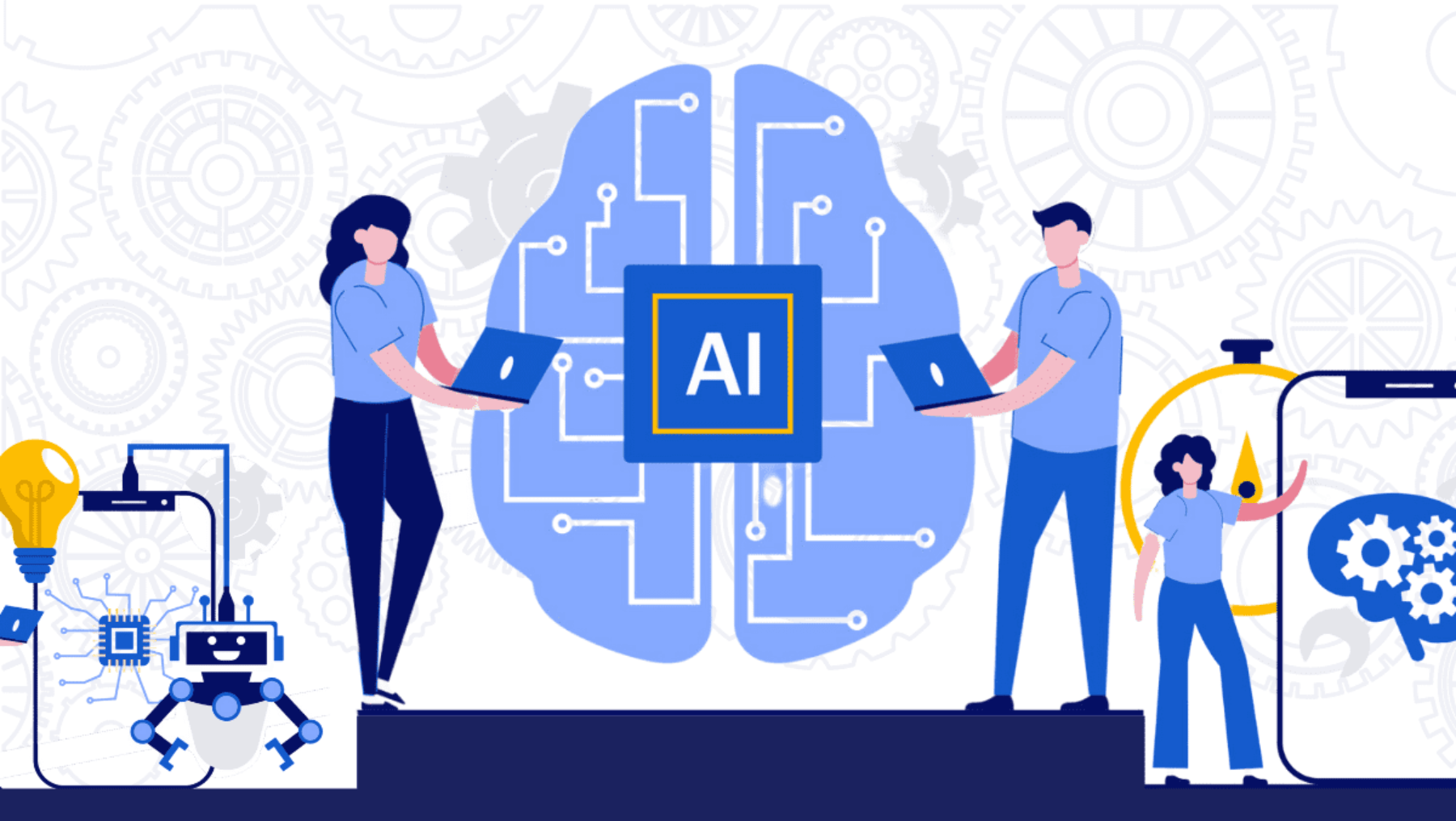
The best CEOs share one defining strength: the ability to make high-quality decisions quickly and confidently. In a world where markets shift overnight and disruption is constant, decision-making has become a competitive advantage. Today, the leaders who consistently outperform their competitors have something else in common: they are using AI to enhance their judgment, expand their insight and sharpen their strategic clarity.
AI is no longer just a technical tool. It has become a leadership instrument. The CEOs who understand how to use it are reshaping how modern organisations think, act and grow.
AI Turns Data Into Strategic Insight
Every organisation sits on far more data than any human can process or interpret alone. Historically, leaders relied on reports, instinct and hindsight to make decisions. AI changes this entirely.
Leading CEOs use AI to turn raw data into clear and actionable intelligence. It uncovers patterns leaders cannot see, identifies risk before it becomes a problem and highlights opportunities that would otherwise go unnoticed. Instead of making decisions based on partial information, CEOs gain a complete view of trends, operations, customers and performance in real time.
This level of insight allows leaders to move faster with more precision and far greater confidence.
AI Reduces Uncertainty
A large part of leadership involves managing uncertainty. The best CEOs do not eliminate uncertainty; they reduce its impact. AI helps by providing predictions and insights that highlight what is likely to happen next.
Whether it is forecasting demand, anticipating customer behaviour, spotting early indicators of market change or predicting operational bottlenecks, AI gives CEOs clarity in environments where clarity is rare.
This is not about replacing intuition. It is about enhancing it with evidence. AI becomes another voice in the decision-making room, one that is data-driven, unbiased and extremely fast.
AI Strengthens Strategic Planning
Strategic planning was traditionally built on historical data and long planning cycles. Markets now move too quickly for that approach to remain effective. Leading CEOs use AI to build dynamic strategies that evolve continuously.
AI helps leaders test scenarios, analyse outcomes with greater accuracy and identify the most resilient path forward. Instead of setting a strategy once a year and hoping it holds, AI allows leaders to monitor reality, adapt instantly and keep the organisation aligned with changing conditions.
AI Enhances Operational Performance
Great decisions rely on operational clarity. AI provides visibility across the entire organisation. From productivity and workflow performance to financial efficiency and customer experience, AI highlights not only what is happening but why it is happening.
When leaders can see the story behind the numbers, their decisions become sharper and more effective. They can adjust resources, support teams better, address weaknesses and scale strengths faster than competitors.
AI Improves the Quality of Leadership Conversations
AI does not just give CEOs better data. It improves the conversations they have with their executive teams. Instead of debating assumptions, teams focus on solutions. Instead of trying to interpret complex information, they use AI insights to collaborate more strategically.
Meetings become more productive, decisions become more unified and the leadership team becomes more aligned around shared facts rather than individual opinions.
AI Empowers Human Judgment, Not Replaces It
One of the biggest misconceptions is that AI replaces leaders. In reality, the CEOs who use AI successfully treat it as a partner. AI provides the information, and leaders provide the judgment.
The combination of human experience and artificial intelligence creates a decision-making environment that is faster, clearer, more confident and more resilient.
The CEOs Who Use AI Today Will Outperform Tomorrow
AI is advancing at a pace most organisations cannot match. The CEOs who integrate it into their decision-making processes now are building strategic power that grows over time. They learn faster, adapt faster and lead more decisively.
Their organisations become more agile, more efficient and more competitive, not because AI replaces people, but because it elevates the entire leadership capability of the business.
Conclusion
The rise of AI represents a fundamental shift in what modern leadership looks like. CEOs who embrace it are not simply adding a tool to their technology stack. They are transforming how they think, plan and act.
At Kyanite, we help leadership teams turn AI into a practical decision-making advantage, connecting data, surfacing the insights that matter, and enabling faster, clearer choices across the business. If you want to see how AI can strengthen strategic clarity and execution in your organisation.